As an Amazon Associate, I earn from qualifying purchases.
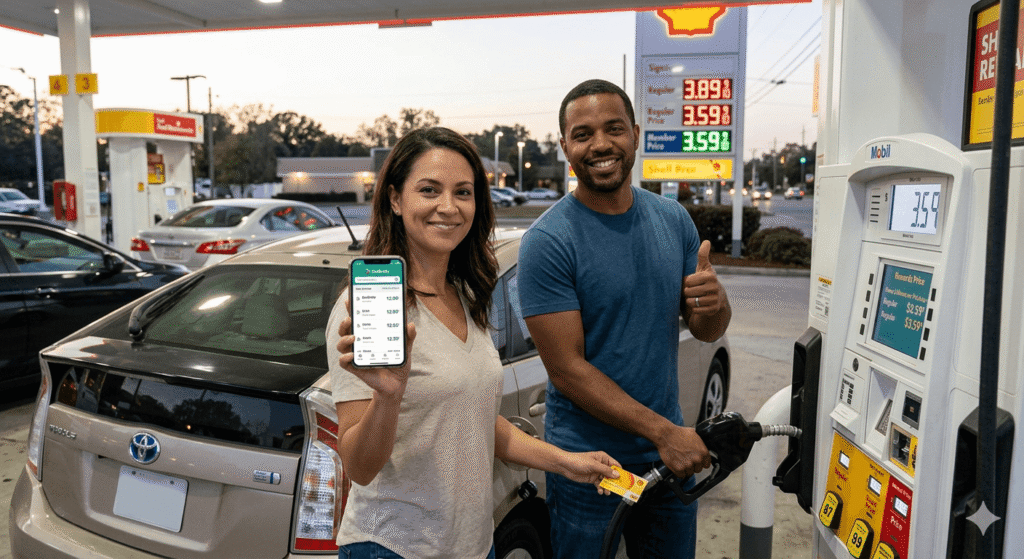
As a small business owner who has spent over 11 years managing a beauty-related enterprise, I know firsthand that every penny counts. My daily commute often takes me from the busy streets of Queens, New York, to my boutique shop in Connecticut. Over the years, I’ve watched gas prices fluctuate wildly, and I realized that fuel expenses were one of the largest “leaks” in my business and personal budget.
In this comprehensive guide, we will explore how a multi-pronged approach—combining technology, maintenance, and a shift in mindset—can save you hundreds, if not thousands, of dollars annually. For those of us on the “Smart Path to Retirement,” these savings aren’t just pocket change; they are additional capital we can invest in our future.
1. Leverage Technology: Data is Your Best Co-Pilot
Gone are the days of driving aimlessly to find a cheaper station. In 2026, real-time data is your greatest ally in the fight against high fuel costs.
- GasBuddy & Upside: I never leave my driveway in Queens without checking GasBuddy. It’s common to see price differences of 20 to 40 cents per gallon between stations just a few miles apart. Combining this with Upside for cash-back rewards can effectively lower your net cost even further.
- The Safety Factor: To manage these apps safely during a long commute, a reliable [Magnetic Phone Mount] is essential. It keeps your eyes on the road while allowing you to navigate toward the cheapest refueling stop along your route.
2. Maintenance: The “Invisible” Efficiency Boost
We often focus on the price of gas, but we forget how our vehicle’s condition dictates how much of that gas we actually use.
- Tire Pressure Precision: Under-inflated tires increase rolling resistance. I’ve found that keeping my tires at the manufacturer’s recommended PSI improves my mileage by about 3%. Instead of hunting for a working air pump at a gas station, I now use a [Portable Tire Inflator]. It’s a top-rated Amazon item for a reason—it’s fast, cordless, and ensures I’m always driving at peak efficiency.
- Clean Out the “Mobile Storage”: As a business owner, it’s easy to let the trunk become a storage unit for supplies. However, every extra 100 pounds reduces fuel economy by 1%. I recently cleared out my trunk and noticed an immediate difference in how often I had to visit the pump.
3. Strategic Habits: Warehouse Clubs and Loyalty Programs
In the U.S. market, loyalty pays. If you aren’t utilizing warehouse clubs or grocery rewards, you are essentially leaving money on the table.
- The Costco/Sam’s Club Advantage: These retailers typically sell fuel at a very narrow margin to entice members. On average, their gas is 15 to 30 cents cheaper than branded stations. When I’m heading to my shop in Connecticut, I always plan my stops around these locations.
- Grocery Fuel Points: Chains like Stop & Shop or Kroger offer fuel points for every dollar spent. During “4x point” promotions on gift cards, savvy shoppers can sometimes save an entire dollar per gallon. This is a massive win for your monthly cash flow management.
4. Mastering “Eco-Driving” for Long-Term Wealth
Your driving style is the most important tool for saving money. Rapid acceleration and hard braking are “wealth killers.”
- The 5-Second Rule: Accelerate gently. Imagine an egg under your pedal.
- Observe the Speed Limit: Most vehicles reach peak fuel efficiency at around 50 to 60 mph. For every 5 mph you drive over 60 mph, it’s like paying an additional 30 cents per gallon for gas.
- OBD2 Monitoring: For those who love data (like my interest in tracking stock tickers like NVDA and TSLA), using an [OBD2 Scanner] is a game-changer. These devices plug into your car and show you real-time fuel consumption, helping you gamify your driving to see how high you can push your MPG.
5. The “Smart Path” Connection: Small Savings, Big Future
You might wonder, “Does saving 50 cents a gallon really matter for my retirement?”. Let’s look at the math. If you save $10 a week on gas and invest that $40 a month into a diversified ETF portfolio (like SPLG or QQQM), with an average 8% annual return, that small change grows to over $23,000 in 20 years.
Managing your fuel costs is about more than just the car; it’s about optimizing your life for financial independence.
Conclusion
Saving money on gas in the U.S. is a lifestyle shift. By checking your tire pressure today, cleaning out your trunk, and downloading a rewards app, you can save thousands over your driving career. Start small, stay consistent, and watch your “Smart Path to Retirement” grow stronger with every mile.