As an Amazon Associate, I earn from qualifying purchases.
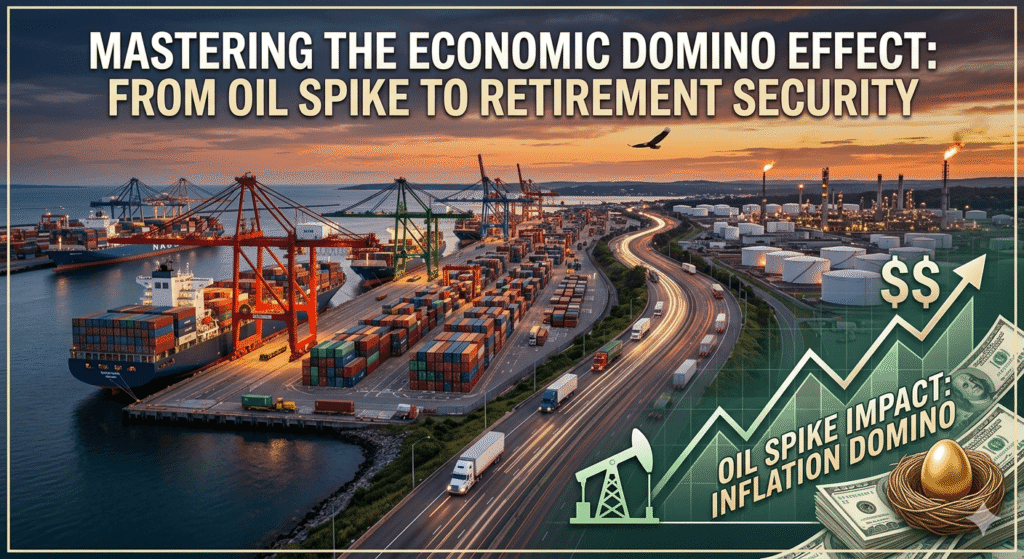
The global economy is currently standing at a precarious crossroads. While diplomatic efforts in the Middle East suggest a potential ceasefire, the financial world is bracing for a different kind of storm. For long-term investors and those following a disciplined retirement roadmap, understanding the link between energy costs, inflation, and stock market volatility is no longer optional—it is a necessity for survival.
As we look toward the end of May 2026, a “perfect storm” is brewing in the energy sector. Despite the headlines of a “1-page MOU” between major powers, structural deficits in oil supply are threatening to trigger a massive inflationary spike. This article explores the mechanics behind this surge and how it impacts your path to financial independence.
The Strategy of “Borrowing Time” with Strategic Reserves
For the past year, major economies have managed to keep a lid on energy prices by aggressively tapping into their Strategic Petroleum Reserves (SPR). This was a calculated move to buffer the global economy against war-time shocks. However, this policy has reached a critical “dead end.”
The United States, for instance, has utilized its reserves to the point where inventories are at multi-decade lows. As we approach June, the narrative is shifting from supply release to mandatory replenishment. When governments stop selling and start buying millions of barrels to refill their tanks, it creates a massive “demand floor” that prevents prices from falling, even if a ceasefire is signed tomorrow.
Furthermore, the physical infrastructure of global oil trade—specifically the Strait of Hormuz—remains in a state of “logistical paralysis.” Even if the guns fall silent, the process of de-mining waters and repairing damaged tankers will take months. This lag in supply restoration is the primary reason why analysts predict Brent Crude could soar past $115 per barrel by late May.
The Inflationary Domino Effect: From Gas Pump to Grocery Store
The common misconception is that rising oil prices only affect those at the gas pump. In reality, oil is the “bloodstream” of the global economy. When the cost of a barrel rises, it triggers a chain reaction known as Cost-Push Inflation.
- Logistics and Surcharge Spikes: Every product in your home arrived there via a truck, ship, or plane. As fuel costs skyrocket, shipping companies implement fuel surcharges. This cost is immediately passed down to the consumer.
- Petrochemical Dependency: Beyond fuel, petroleum is a core raw material for plastics, fertilizers, and synthetic fibers. Higher oil prices lead to more expensive food (due to fertilizer costs) and more expensive consumer goods.
- The Wage-Price Spiral: As the cost of living rises, workers demand higher wages to maintain their purchasing power. Businesses, in turn, raise prices further to cover these higher labor costs, creating a feedback loop that is incredibly difficult for central banks to break.
The “Higher for Longer” Trap for Investors
For the stock market, the biggest threat isn’t just the oil price itself, but the reaction of the Federal Reserve. The market has been desperately pricing in “interest rate cuts” for the latter half of 2026. However, if energy-driven inflation remains sticky, the Fed will be forced to keep interest rates “Higher for Longer.”
High interest rates act as a gravity force on stock valuations. Growth stocks and the tech sector—which many investors rely on for a 17-year “growth sprint”—are particularly sensitive. When the “risk-free rate” (government bonds) stays high, the present value of future earnings for tech companies decreases. This is why we see “the wind being taken out of the sails” for major indices like the Nasdaq and S&P 500 during oil spikes.
Protecting Your “SmartPath to Retirement”
If you are a small business owner or a long-term investor with a target retirement age of 67, how should you navigate this volatility? The key is not to panic, but to pivot.
- Look for Pricing Power: Invest in companies that have the “moat” necessary to pass increased costs to their customers without losing business. This often includes essential services and dominant tech platforms.
- Dividend Aristocrats as a Buffer: During inflationary periods, companies with a history of increasing dividends (like those found in the SCHD or SPLG ETFs) provide a much-needed cash flow cushion.
- Diversification is King: While US Tech (QQQM) is a fantastic growth engine, balancing it with energy-sector exposure or value stocks can provide a hedge against rising oil prices.
Conclusion: The Road Ahead
The end of May 2026 will likely be remembered as a period of “Counter-Intuitive Economics.” We may see peace in the headlines but volatility in the markets. By understanding that the depletion of strategic reserves and the logistical bottlenecks in the Middle East have long-lasting effects, you can better prepare your portfolio for the inflationary pressure ahead.
Stay disciplined, keep your eyes on the long-term horizon, and remember that every market cycle—no matter how inflationary—presents new opportunities for the informed investor. Your smart path to retirement depends on your ability to see the dominoes before they fall.
Disclaimer: This article is for informational purposes only and does not constitute financial advice. Always consult with a professional before making investment decisions. This post contains affiliate links; we may earn a commission at no extra cost to you.