As an Amazon Associate, I earn from qualifying purchases.
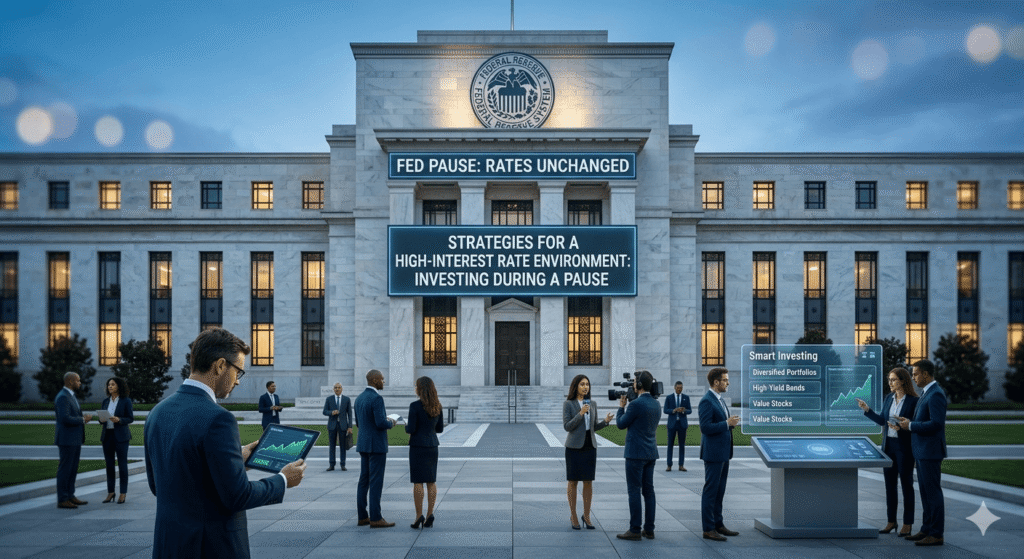
The recent decision by Federal Reserve Chair Jerome Powell to hold interest rates steady for the third consecutive quarter has left many investors asking the same question: What should we do next?
With inflation still lingering and economic signals mixed, we are clearly in a late-cycle environment. This is not the time for reckless bets or emotional investing. Instead, it’s a moment that calls for discipline, patience, and a well-balanced strategy.
In this article, we’ll break down what the Federal Reserve’s stance really means—and how you can position your investments wisely in today’s market.
Understanding the Current Market Environment
The Federal Reserve’s decision to pause rate hikes sends a nuanced message. It doesn’t mean the economy is fully stable, nor does it suggest that rate cuts are imminent.
Here’s what we know:
- Interest rates remain elevated
- Inflation is cooling, but not fully under control
- Economic growth is slowing, but not collapsing
This combination creates uncertainty. And uncertainty is where many investors make costly mistakes.
Why “Wait and See” Is the Fed’s Strategy
The Federal Reserve is walking a tightrope. Cutting rates too soon could reignite inflation, while raising rates further could push the economy into a recession.
By holding rates steady, the Fed is essentially saying:
“We need more data before making the next move.”
For investors, this means one thing—don’t expect quick wins. This is a market that rewards consistency, not speculation.
1. Prioritize Diversification Over Aggressive Bets
In uncertain markets, concentration increases risk. Many investors make the mistake of going all-in on one trend—whether it’s tech stocks, AI, or real estate.
A smarter approach is diversification:
- Allocate a portion to equities (stocks)
- Keep a meaningful percentage in cash or cash equivalents
- Consider short-term bonds for stable returns
With short-term Treasury yields still attractive, earning 4–5% with relatively low risk is a compelling option.
2. Balance Growth Stocks and Value Stocks
High interest rates tend to put pressure on high-growth stocks, especially those with elevated valuations. However, strong companies with solid fundamentals continue to perform well.
Consider a balanced approach:
- Growth leaders like Apple and Microsoft for long-term upside
- Value sectors such as financials, energy, and consumer staples for stability
This combination allows you to participate in market growth while protecting against downside risk.
3. Be Cautious With Rate Cut Expectations
One of the biggest misconceptions in the market right now is the expectation of imminent rate cuts.
While markets often price in future events, the Federal Reserve has made it clear that inflation control remains the top priority.
This means:
- Avoid overcommitting to long-duration bonds too early
- Consider gradual, phased investments instead of lump-sum bets
Patience is critical. Timing the market rarely works—but disciplined entry does.
4. Keep Cash Flow and Liquidity in Focus
For small business owners and individuals managing household finances, this environment requires extra caution.
Higher interest rates impact:
- Loan costs (mortgages, business loans, credit lines)
- Consumer spending behavior
Maintaining liquidity is not just a defensive move—it’s a strategic advantage. Cash allows you to seize opportunities when markets correct.
5. Think Long-Term, Not Short-Term Noise
Markets are filled with headlines, predictions, and conflicting opinions. But long-term investing is not about reacting to every piece of news.
Instead:
- Stick to a consistent investment plan
- Rebalance your portfolio periodically
- Focus on quality assets rather than short-term trends
Remember, wealth is built over time—not overnight.
Key Takeaways for Investors
- Avoid aggressive, all-in strategies
- Maintain a healthy mix of stocks, cash, and bonds
- Balance growth and value investments
- Don’t rely solely on expected rate cuts
- Prioritize liquidity and financial stability
Final Thoughts
This is not an easy market—but it’s not an impossible one either.
The era of easy money is over, and we are now in a phase where discipline matters more than ever. Investors who stay patient, manage risk effectively, and avoid emotional decisions will be in the best position to succeed.
Instead of chasing quick profits, focus on building a resilient portfolio that can weather uncertainty.
Because in times like these, the goal isn’t just to grow your money—it’s to protect it.
Disclaimer: I am not a financial advisor. This post reflects my personal investment philosophy and strategy. All investments carry risk, and past performance is not indicative of future results. Please conduct your own research before making financial decisions.