As an Amazon Associate, I earn from qualifying purchases.
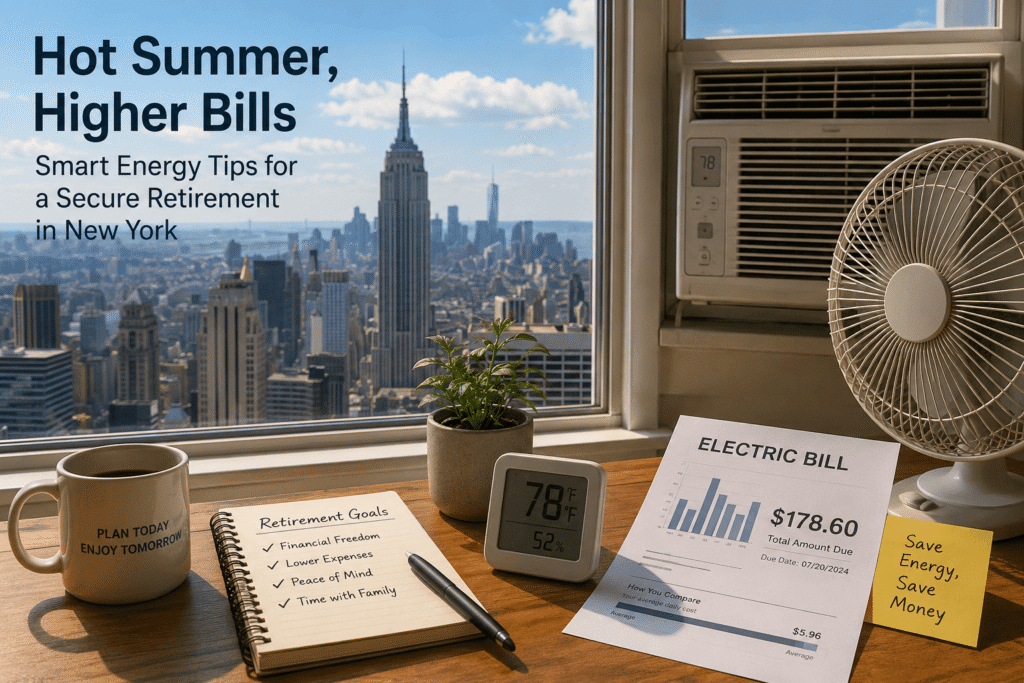
There have been increasing predictions that this summer in New York could be one of the hottest in recent years.
At first, I didn’t pay much attention to it. Weather forecasts like this come and go every year, and it often feels like just another seasonal headline.
But as I’ve been slowly preparing for retirement, my perspective has started to change. I no longer look at extreme weather as just a comfort issue. I now see it as something directly connected to my monthly financial reality.
Because when temperatures rise, so do electricity bills — and that has a very real impact on long-term financial planning.
In retirement planning, it’s not just about savings or investments. It’s also about understanding how your everyday living expenses will behave over time. And summer electricity costs are a perfect example of that.
The Real Issue Isn’t Just the Heat — It’s the Cost of Staying Comfortable
Living in New York during the summer means one thing very clearly: air conditioning is not optional.
When the humidity rises and the temperature climbs, you don’t really debate whether to turn on the AC. You just do it. Especially if you have a family, comfort and health come first.
But what often gets overlooked is what happens next.
The air conditioner runs longer.
It runs harder.
And the electric bill goes up.
It’s a simple equation, but the impact adds up quickly:
- More AC usage
- Higher monthly electricity bills
- Increased overall cost of living
What used to feel like a seasonal expense now feels more like a permanent increase in monthly financial pressure.
And when you are thinking seriously about retirement, those “fixed monthly costs” become much more important than they used to be.
Retirement Planning Changes How You Look at Everyday Life
Before I started thinking about retirement, I never really questioned electricity usage.
It was simple: if it’s hot, turn on the AC.
But now I find myself thinking differently. Even small decisions start to feel connected to a bigger picture.
For example, I now ask myself:
- Will this level of spending still feel manageable after I retire?
- Am I building habits that will help reduce fixed costs in the future?
- What expenses can I control now before I stop working full-time?
Retirement planning doesn’t just change your bank account — it changes your mindset.
Even something as ordinary as electricity usage becomes part of long-term financial awareness.
Why Electricity Costs Matter More Than People Think
Electricity bills are often underestimated because they are monthly and routine. You pay them automatically and move on.
But in reality, they are one of the most consistent and unavoidable expenses in daily life.
In a place like New York, where summers can be intense and humidity is high, cooling costs can become a major part of household expenses.
This is especially important for anyone preparing for retirement, because:
- Income becomes more fixed or reduced
- Expenses become more noticeable
- Small increases compound over time
What feels like a small $30 or $50 increase per month can become significant when viewed annually.
Over time, these costs directly affect financial comfort and stability.
Practical Ways I’m Trying to Reduce Electricity Costs
I’ve realized that saving on electricity is not about drastic changes. It’s about small, consistent habits that reduce unnecessary usage.
Here are a few practical adjustments I’ve started thinking about more seriously:
1. Avoid Overcooling the House
One of the easiest mistakes is setting the air conditioner too low.
Instead of aggressively cooling the house to very low temperatures like 72°F, I try to keep it at a more moderate level.
To compensate, I use fans to help circulate air and maintain comfort.
This simple adjustment can reduce energy consumption without sacrificing comfort.
2. Blocking Sunlight Makes a Huge Difference
One of the most effective but often ignored strategies is controlling sunlight.
During the hottest parts of the day, especially in the afternoon, I keep blinds or curtains closed.
This prevents heat from entering the home in the first place.
Once heat gets inside, it takes much more energy to remove it.
In many cases, blocking sunlight is more efficient than trying to cool down a heated room.
3. Combining Fans with Air Conditioning
Instead of relying solely on air conditioning, I now think of fans as a support system.
Fans help distribute cool air more evenly, which allows the AC to work less while still maintaining comfort.
It’s a simple combination, but it improves efficiency noticeably.
4. Adjusting Daily Energy Habits
Another important step is being more aware of when energy is being used.
For example:
- Avoid using ovens or heat-generating appliances during peak heat hours
- Run dishwashers or laundry machines during off-peak times
- Spread out appliance usage instead of clustering it
These changes might seem small individually, but they create noticeable differences over time.
What Retirement Planning Has Taught Me About Control
One of the biggest lessons I’ve learned is that retirement planning is not just about how much money you save — it’s also about how much control you have over your expenses.
In the past, I used to think about daily life in a very short-term way: get through today, deal with tomorrow later.
Now, I think more in terms of long-term sustainability.
Electricity bills, groceries, insurance, and other fixed expenses are no longer just background costs. They are part of a bigger financial structure that determines how comfortable retirement will actually be.
Final Thoughts: It’s Not Just About the Heat
We don’t yet know exactly how extreme this summer in New York will be.
It might be manageable, or it might break records.
But regardless of the temperature, one thing is already clear to me:
The real issue is not just the heat itself — it’s how that heat affects our long-term cost of living.
For me, this realization has become part of my retirement journey.
I’m no longer just thinking about saving money.
I’m thinking about building a lifestyle that is sustainable, even in small everyday decisions.
And sometimes, that starts with something as simple as how often you turn on the air conditioner.
Disclaimer: I am not a licensed financial advisor, broker, or tax professional. The content on this blog is for informational and educational purposes only and reflects my personal journey and research. Please consult with a qualified professional before making any financial decisions.